Scaling Page Builds Through CMS Migration
Overview
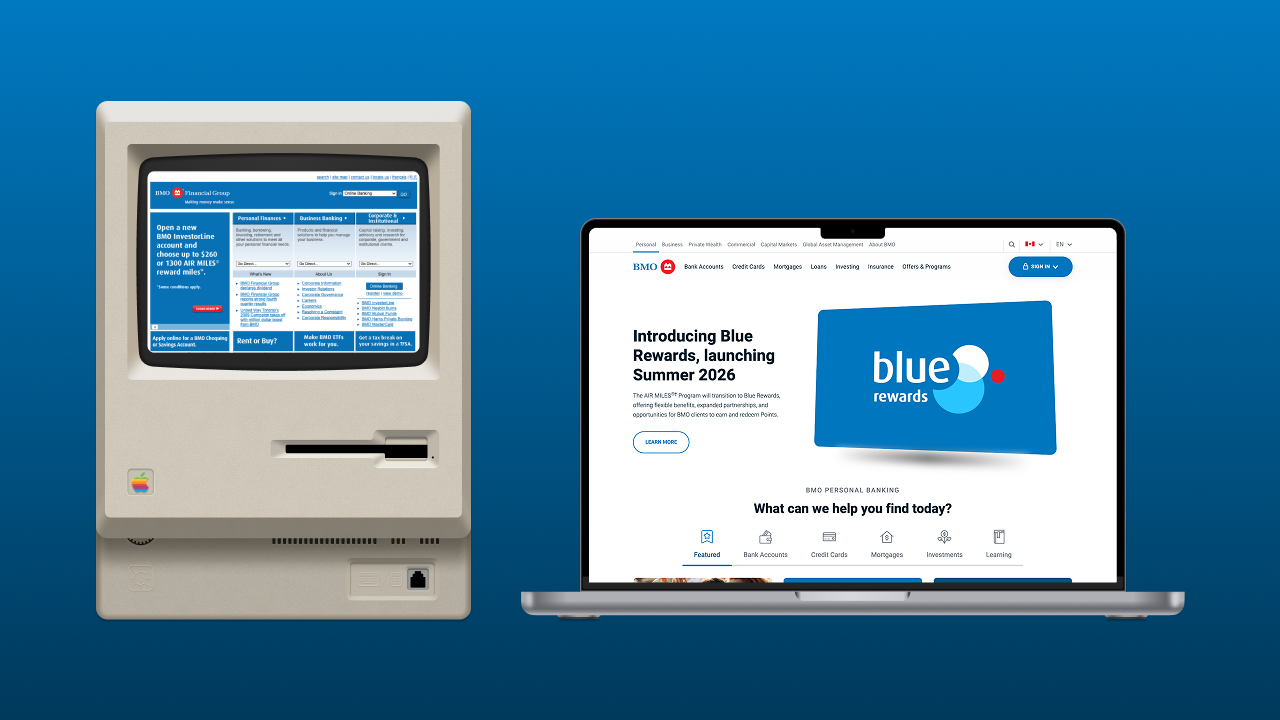
As a Product Designer at BMO, I played a key role in migrating public-facing pages from our old stack (legacy page builder) to a headless CMS (Contentful).
I helped define how pages were audited, categorized, and prioritized, enabling teams across multiple lines of business to scale page creation while improving consistency, reliability, and speed.
Problem
The legacy page builder created major constraints:
Pages required developer support to build and update
UX patterns were inconsistent across LOBs
Migration scope lacked structure and prioritization
Opportunity
Migrating to a headless CMS created an opportunity to:
Enable non-developers to build pages
Leverage a modular system for consistency
Improve speed, consistency, and accessibility
Increase reliability through structured, system-driven layouts
Process
Migration Strategy
I audited hundreds of pages across multiple LOBs and introduced a categorization system to guide migration:
Page Categories
Straight Migration
Pages that aligned with existing modules
No new development requiredRequires Module Amendments
Pages that fit the system with minor enhancementsRequires New Modules
Net-new patterns that expanded system capabilities
This approach allowed us to:
Build a flexible and prioritized backlog
Identify low-effort, high-impact pages early
Balance speed with long-term scalability
System in Practice
I contributed to both building and evolving the system:
Designed new modules to support emerging needs
Amended existing modules to expand functionality
Ensured accessibility and consistency across all modules
This allowed the system to:
Support diverse use cases
Scale without breaking consistency
Continuously evolve with product needs
Solution
A module-based system within Contentful allowed teams to assemble pages without engineering support:
Pages are composed using reusable modules
Content is structured and managed through the CMS
UI patterns remain consistent across pages
This reduced the need for one-off implementations and created a predictable, repeatable way to build pages across teams.
Developer-dependent → System-enabled
Impact
Contributed to scaling Contentful adoption from 344 to 2,105+ live pages, reaching 54.3% migration and accelerating progress toward 100% migration by FY26
40% of pages migrated, delivered two months ahead of the FY25 deadline
Enabled faster page creation across multiple lines of business through modular, CMS-driven workflows
Reduced reliance on developers by enabling designers and content authors to build pages using reusable modules
Improved consistency, reliability, accessibility, and performance across digital experiences
Reflection